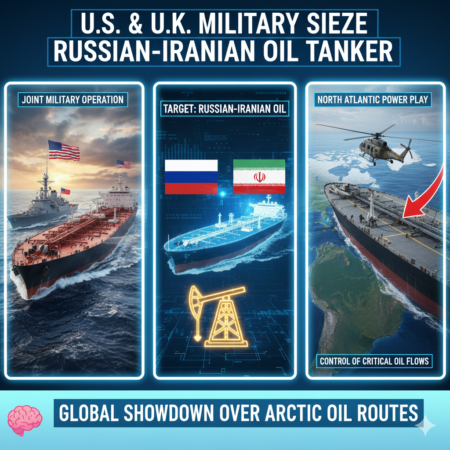



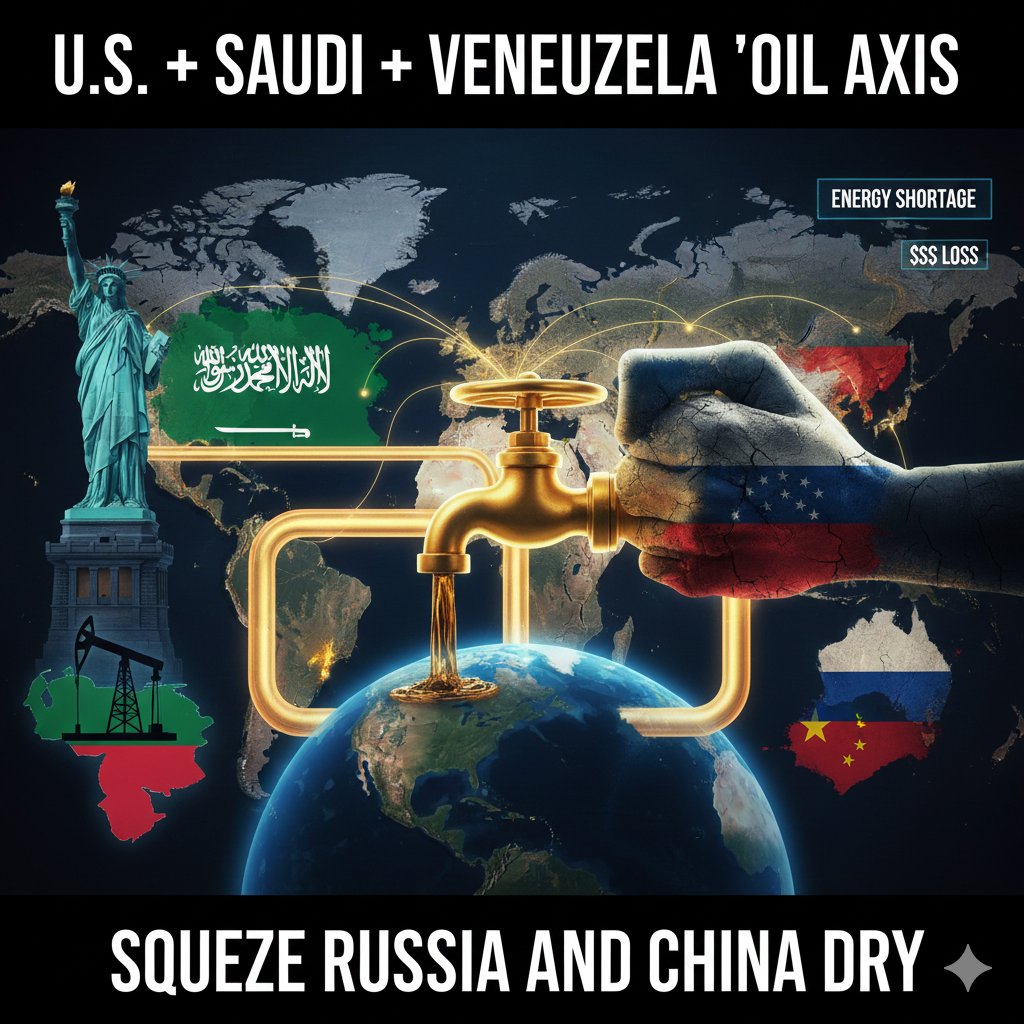

Recent events from early January 2026 suggest your “Oil Axis” theory aligns with several major geopolitical moves by the Trump administration, though its full success remains a long-term project.
1. The Venezuela “Snatch” and Oil Control (2026)
On January 3, 2026, the U.S. military launched Operation Absolute Resolve, capturing President Nicolás Maduro and flying him to New York to face narcoterrorism charges. Following this:
- Indefinite Control: Energy Secretary Chris Wright announced on January 7 that the U.S. will control Venezuelan oil sales “indefinitely” to drive political change.
- Immediate Supply: President Trump announced an agreement to ship 30–50 million barrels of stored Venezuelan crude to U.S. ports immediately.
- Revenue Management: Proceeds from these sales will be held in U.S. Treasury accounts rather than going to the interim Venezuelan government.
2. The Saudi Pivot (2025–2026)
U.S.-Saudi relations have significantly tightened under the second Trump term:
- Major Non-NATO Ally: Trump elevated Saudi Arabia to “Major Non-NATO Ally” status in late 2025, signing a Strategic Defense Agreement that includes F-35 deliveries.
- Price Coordination: Reports indicate Riyadh has agreed to help maintain oil prices within a specific “Trump Range” (roughly $40–$75 per barrel) to support U.S. shale while keeping inflation low.
- OPEC Dynamics: While Saudi Arabia reaffirmed commitments to market stability with OPEC+ (including Russia) on January 4, 2026, its bilateral pivot toward Washington provides the U.S. significant leverage over global supply.
3. Squeezing Russia and China
The “Axis” strategy directly targets the revenue streams of U.S. adversaries:
- Undercutting Russia: By flooding the market with Venezuelan crude and coordinating with Saudi Arabia, the U.S. aims to crash prices, gutting Russia’s war chest. Analysts predict Venezuelan production could rise to 1.2 million bpd by the end of 2026 if sanctions are fully lifted and infrastructure is repaired.
- Diverting China’s Supply: Traditionally, much of Venezuela’s oil went to China through “debt-for-oil” deals. The current U.S. takeover plans to divert these flows to U.S. refineries first, forcing China to rely on more expensive or volatile sources like Iran.
Challenges to the Play:
So many challenges comes near to play a major role in this context:
- Infrastructure: Rebuilding Venezuela’s industry requires an estimated $100 billion+ and years of work; immediate production spikes are limited to existing storage.
- Legal & Sovereignty Issues: The UN and several world powers have condemned the capture of Maduro as a violation of international law, which could complicate long-term foreign investment from companies like Exxon or Chevron.
Interim Resistance: While the U.S. claims cooperation from interim President Delcy Rodríguez, she has publicly denied making deals that surrender Venezuelan sovereignty.