

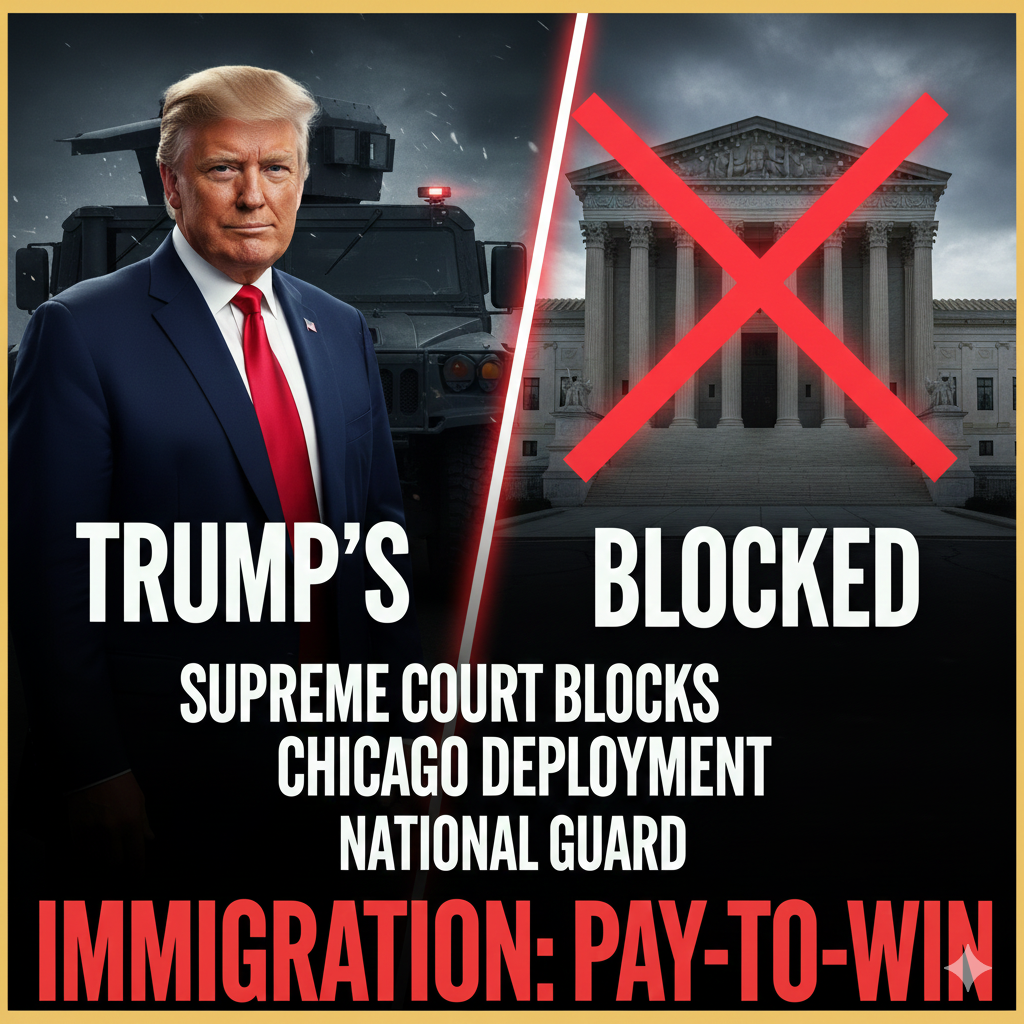

On December 23, 2025, the U.S. Supreme Court declined to lift a lower-court block on President Trump’s attempt to deploy National Guard troops to Chicago.
The 6–3 decision rejected the administration’s emergency request to allow hundreds of federalized guardsmen to protect U.S. Immigration and Customs Enforcement (ICE) agents and facilities amid ongoing protests.
Details of the Ruling
- Setback for the White House: The ruling is considered a rare defeat for the Trump administration, which has seen frequent success with emergency appeals at the Supreme Court throughout 2025.
- Legal Basis: The majority found that the administration failed to provide a sufficient source of authority to allow the military to execute domestic laws in Illinois over the governor’s objection.
- Dissenting Justices: Conservative Justices Samuel Alito, Clarence Thomas, and Neil Gorsuch publicly dissented from the unsigned order.
- Scope: While the decision specifically addresses the Chicago area, it may influence similar legal battles over National Guard deployments in other Democratic-led cities like Portland and Washington, D.C..
Background of the Conflict
The Trump administration sought to federalize the Illinois National Guard under Title 10, citing a “danger of rebellion” and claiming ICE agents were facing “mass violent resistance” from protesters. Illinois officials countered that local law enforcement had the situation under control and that the deployment constituted an “unprecedented intrusion” on state sovereignty.
This ruling upholds a previous Temporary Restraining Order from U.S. District Judge April Perry, who concluded that the factual conditions for such an extraordinary military intervention simply did not exist.