


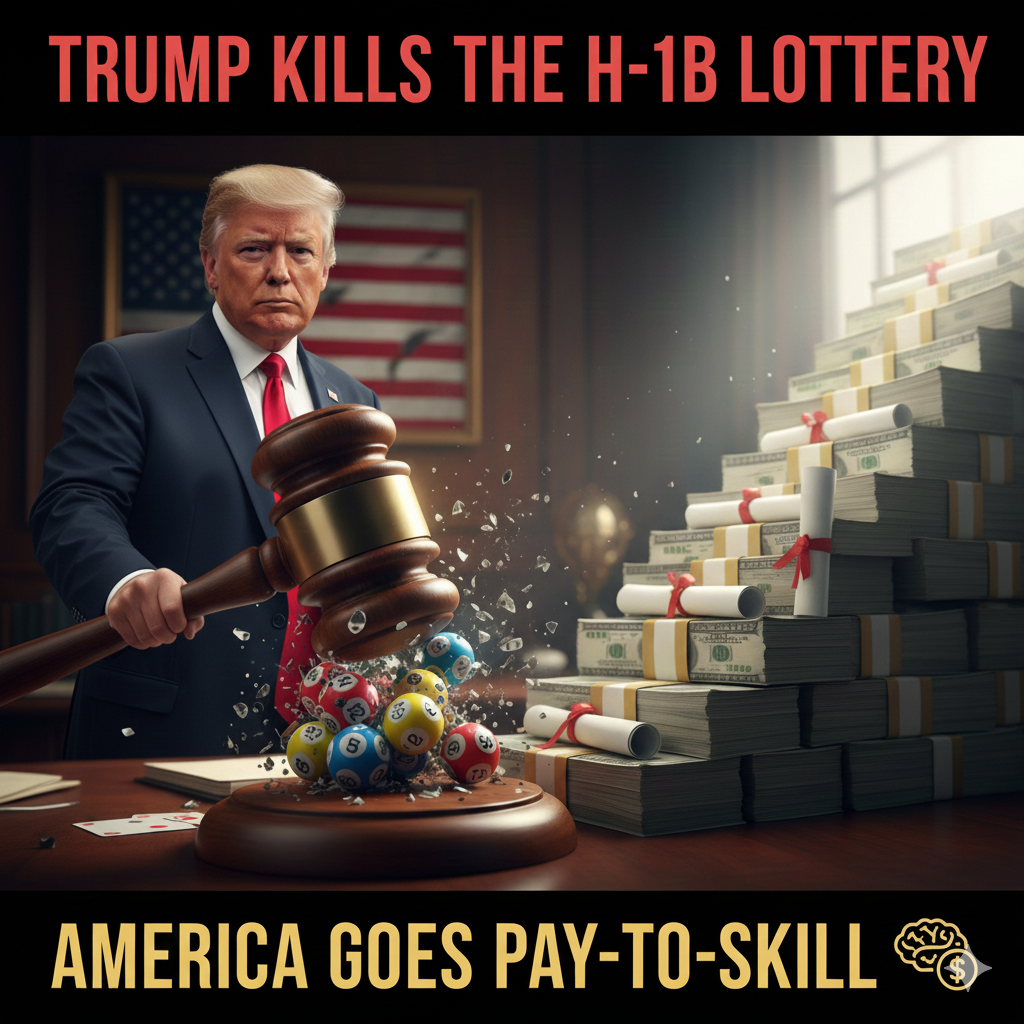

In 2025, the Trump administration is expected to have fundamentally overhauled the H-1B visa program, replacing the random lottery with a system that prioritizes higher-paid workers and imposes substantial new fees.
1. Replacement of the H-1B Lottery
The Department of Homeland Security (DHS) finalized a rule on December 23, 2025, that scraps the random lottery. It has been replaced by a weighted selection system based on salary levels:
- Effective Date: The new system takes effect February 27, 2026, and will apply to the FY 2027 registration season (starting March 2026).
- Weighted Odds: Instead of equal chances, applicants are granted entries based on Department of Labor wage levels:
- Level IV (Highest): 4 entries in the selection pool.
- Level III: 3 entries.
- Level II: 2 entries.
- Level I (Lowest): 1 entry.
2. The $100,000 Application Fee
As of September 21, 2025, a presidential proclamation requires a $100,000 payment for new H-1B visa petitions.
- Status: A U.S. federal judge upheld this fee on December 23, 2025, ruling it within the President’s broad statutory authority over national security and economic policy.
- Scope: The fee applies to new petitions for beneficiaries currently outside the U.S.. It generally does not apply to H-1B renewals or individuals already in the U.S. with valid status, provided their paperwork is filed within the specified grace periods.
3. The $1 Million “Gold Card” Visa
The administration also launched the “Trump Gold Card” program, a fast-track residency pathway for wealthy foreigners:
- Cost: A $1 million contribution (donation) to the U.S. government, plus a $15,000 processing fee.
- Corporate Sponsorship: Companies can secure a “Corporate Gold Card” for an employee for $2 million.
- Platinum Tier: A high-tier “Platinum Card” is offered for $5 million, reportedly providing additional benefits such as tax exemptions on foreign income.
- Legal Basis: The program operates as an expedited version of the existing EB-1 and EB-2 categories, using the payment as “evidence” of exceptional business ability.
Summary of Impact
This policy shift transitions the H-1B from a volume-based system to one defined by economic “scarcity”. Critics argue it effectively prices out early-career talent and small businesses, while the administration maintains it prevents companies from undercutting American workers with low-wage foreign labor.