

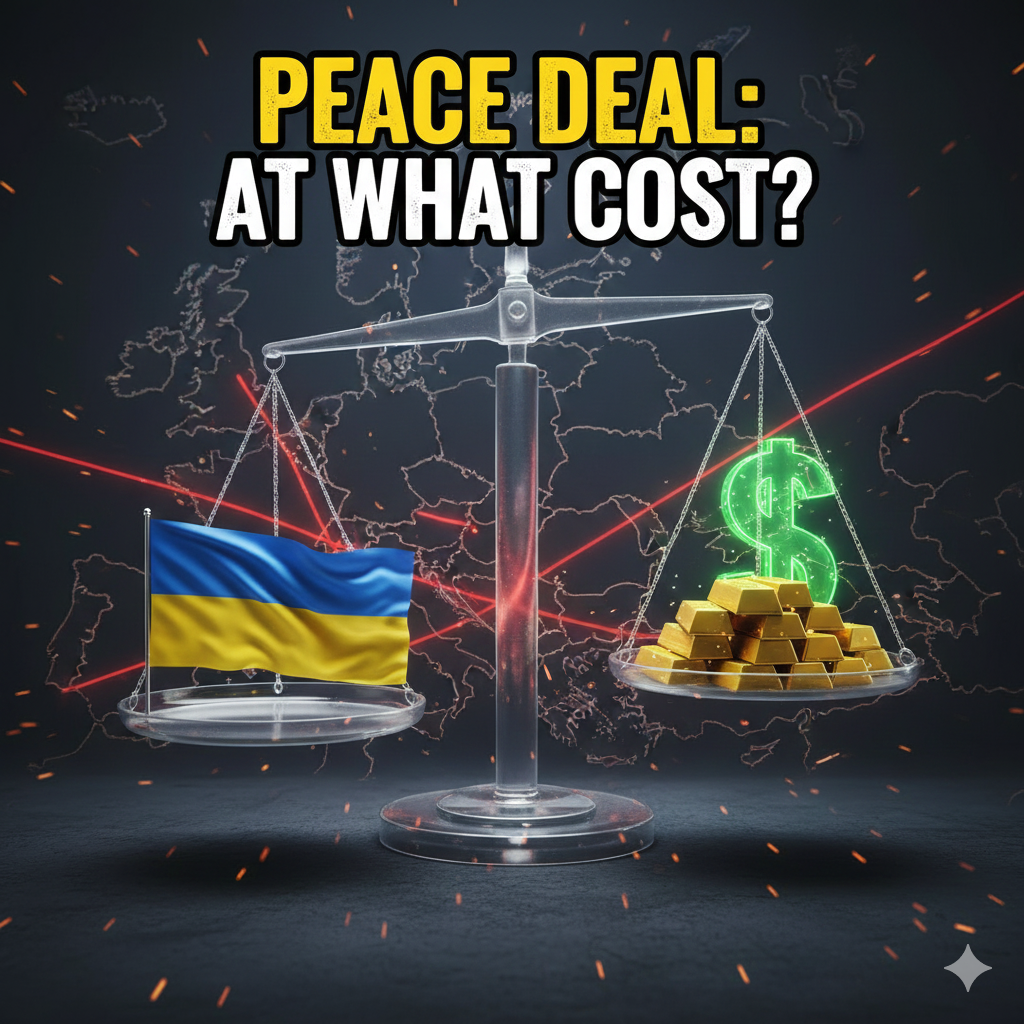

As of December 22, 2025, the U.S. is leading an intensive diplomatic push to end the war in Ukraine through a controversial 28-point peace plan. While negotiators in Miami describe talks as “constructive,” the “cost” of the deal involves significant territorial, military, and financial concessions from Ukraine and Europe.
The Territorial and Sovereignty Cost
- Territorial Cessions: The proposal requires Ukraine to withdraw from its remaining controlled areas in Donetsk Oblast, which would be recognized internationally as Russian territory. Crimea and Luhansk would be recognized as de facto Russian.
- NATO Foreclosure: Ukraine must enshrine in its constitution that it will not join NATO, and NATO must amend its statutes to permanently exclude Ukraine.
- Military Limits: Ukraine’s active military personnel would be capped at 600,000, down from its current estimated force of 880,000.
The Economic and Financial Cost
The plan shifts much of the financial burden for reconstruction to Europe and the private sector, while providing the U.S. with significant investment oversight.
- Reconstruction Funding: Current estimates place the total cost of rebuilding Ukraine at approximately $524 billion over the next decade.
- Frozen Russian Assets: The plan proposes using $100 billion in frozen Russian assets for U.S.-led reconstruction efforts, with the U.S. receiving 50% of the profits from these ventures.
- European Burden: Europe is expected to contribute an additional $100 billion for reconstruction. Recently, EU leaders agreed to a €90 billion ($106 billion) package to support Ukraine’s economic and military needs through 2027.
- Natural Resources: The U.S. may seek to recoup its costs through deals involving Ukraine’s mineral wealth and rare earth minerals.
Security Guarantees
To offset these concessions, the U.S. has proposed “Article 5-like” security guarantees:
- Multinational Force: A European-led force, supported by the U.S., would operate inside Ukraine to secure its skies and seas.
- Verification: A U.S.-led monitoring mechanism would verify ceasefire compliance and provide early warnings of future attacks.
- Binding Commitments: The U.S. would commit to taking measures, potentially including armed force, to restore security if Ukraine is attacked again.
Current Status of NegotiationsTalks involving U.S. envoys, Russian representatives, and Ukrainian officials are ongoing in Miami. While President Zelenskyy has expressed openness to the trilateral format, he continues to resist the formal handover of territory and limits on Ukraine’s self-defense. Russia has indicated the plan could be a “basis” for a settlement but remains skeptical of European amendments that introduce tougher conditions.